Remembering September 11th
Fr. John Petrich Reflects on Ground Zero Twenty-Five Years Later
Fr. John Petrich Reflects on Ground Zero Twenty-Five Years Later
September 11 will always be a day of remembrance for Americans, especially for those whose lives were directly touched by the events in 2001. The images and stories from that day remain vivid even twenty-five years later. Yet alongside the memories of loss and uncertainty are stories of faith, compassion, and resilience.
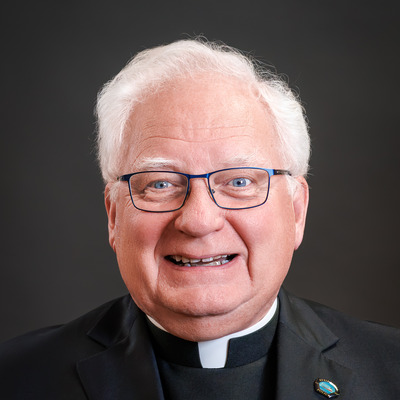
For Fr. John Petrich, pastor of St. Joseph Parish in Duluth and chaplain for St. Luke's Hospital, the Duluth Police Department, and the St. Louis County Sheriff's Office, those memories include fifteen days spent ministering at Ground Zero in New York City.
Looking back today, he remembers the devastation. But he also remembers people rediscovering faith, recognizing the dignity of others, and coming together in ways that revealed the best of the human spirit.
When the attacks occurred on the morning of September 11, Fr. Petrich and a colleague were called to the City of Duluth's Emergency Operations Center. Across the country, officials were trying to make sense of an unfolding crisis while preparing for the possibility of additional attacks.
After all commercial aircraft were ordered to land, several planes that were still in the air were diverted to Duluth. Passengers who had expected an ordinary day suddenly found themselves stranded in northern Minnesota, uncertain about what had happened and unsure of what would come next.
"There was an uneasiness in everyone," Fr. Petrich recalls. "Nobody knew what was going to happen."
Security concerns were heightened nationwide. One decision he remembers distinctly was requiring passengers who had already landed and were exiting aircraft to pass through metal detectors before leaving the airport. Under ordinary circumstances, such a measure might have seemed unusual, but during those hours, nothing felt ordinary.
In the weeks following the attacks, the International Conference of Police Chaplains organized a disaster response team made up of chaplains and crisis professionals from around the country. Fr. Petrich was selected to join the team and assist crisis management efforts in New York City.
He flew into Newark on a Sunday expecting to report for duty the following day. Instead, almost immediately after arriving, a man approached the group and asked if a priest was present.
When Fr. Petrich identified himself, he was asked if he would celebrate Mass at the city's Emergency Operations Center.
Escorted there by squad car, he entered a large gymnasium filled with approximately eighty people. Large television screens surrounded the room, carrying constant news coverage and updates.
"There was just this sense that everyone was expecting another attack at any moment," he said.
That evening, Fr. Petrich's group was sent to Ground Zero.
Having never visited New York before, he suddenly found himself at the site of one of the most significant tragedies in American history.
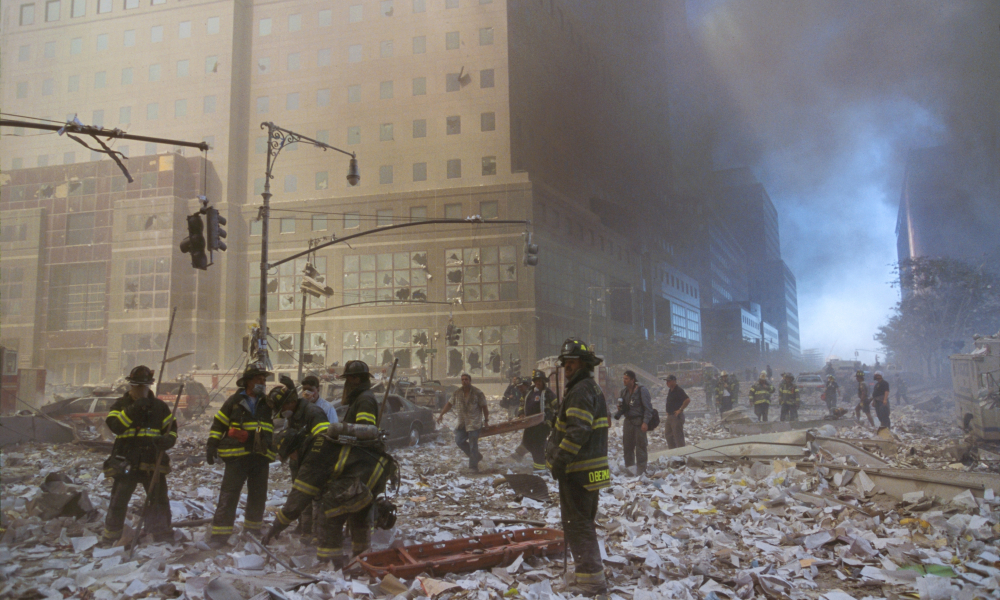
His first assignment was in a "bagging and tagging" area, where evidence and human remains were processed. Shortly before his arrival, recovery crews had located the remains of 75 firefighters in a stairwell, along with Port Authority personnel. Fr. Petrich and others worked until three o'clock in the morning assisting with those recovery efforts.
In the days that followed, he worked alongside a diverse team that included stress-management specialists from the Boston and San Francisco Police Departments, FEMA firefighters, and another chaplain from Ohio. Their shifts generally ran from noon until midnight.
Three weeks after the attacks, smoke could still be seen rising from portions of the debris field and parking garages.
Every day brought reminders of the enormous task recovery crews faced.
Whenever workers thought they heard a sound coming from beneath the rubble pile, which remained nearly ninety feet deep in places, whistles would immediately stop all activity. Teams would then try to determine the source of the sound, hoping it might indicate a survivor.
Most of the time they found nothing. Sometimes they located human remains.
What impressed Fr. Petrich most was the care shown throughout the process.
"The level of respect that everyone took for any remains found was incredible," he said.
Amid the difficult work, Fr. Petrich began noticing people often returning to the foundations that had shaped them earlier in life.
"The things that you learned way back when you were young suddenly come back," he said.
One observation that stayed with him was how many people drew upon lessons of faith they had learned years earlier. Fr. Petrich said many people question the value of religious education classes or wonder whether bringing children to Mass really makes a difference. What he witnessed at Ground Zero suggested otherwise.
In the face of tragedy, people often returned to the faith that had been planted in them as children. Prayers they had learned years before, habits of faith formed through Mass attendance, and lessons from religious education resurfaced, sometimes unexpectedly. Even among those who had not actively practiced their faith for years, Fr. Petrich saw those foundations emerge when they were needed most.
"A lot of people didn't even realize where those reactions were coming from," he said. "All of a sudden, the faith they didn't know they had would come out."
He believes those foundations remained present even when people were not consciously aware of them.
One experience in particular has remained with him throughout the years.
A fire chaplain from Toronto approached him one evening and explained that a group of firefighters wanted to go to confession. The chaplain himself was a Lutheran pastor, so he asked Fr. Petrich for help.
When he arrived, Fr. Petrich found approximately thirty to forty firefighters waiting.
Looking for privacy, he asked a nearby ambulance crew if he could use their vehicle. The ambulance became a temporary confessional.
To let others know whether it was occupied, he turned on the ambulance's red emergency lights whenever someone was inside and shut them off when the confessional was free.
The process continued throughout the evening as firefighter after firefighter entered the ambulance seeking reconciliation and spiritual support.
For Fr. Petrich, it was a powerful reminder that even amid exhaustion, grief, and uncertainty, people were seeking God.
Ground Zero also reinforced another lesson that has stayed with him ever since.
Everyone's spiritual life is deeply personal.
There were things that meant a great deal to one person that might not have carried the same significance for someone else. The reverse was also true. What mattered most, he found, was taking time to listen and understand rather than judge.
"It becomes important to simply listen to others and be compassionate and helpful in the things that matter to them," he said.
That lesson continues to shape the way he approaches ministry.
Looking back, Fr. Petrich believes one of the lasting impacts of September 11 was the way people listened to each other and recognized one another's value. In the months following the attacks, he saw people connecting in deeper ways and turning toward faith more intentionally.
Many who ordinarily might not have looked to religion for guidance found themselves seeking spiritual answers. At the same time, Fr. Petrich saw people listening to one another more intently and connecting in deeper ways. In the midst of tragedy, people seemed to recognize each other's value in a way they hadn't before.
Over the years, he believes some of that spirit has faded, but the lesson remains as relevant as ever.
During the time he spent at Ground Zero, Fr. Petrich was often focused on the work that needed to be done each day. It was not until the Port Authority Memorial Service at Madison Square Garden that he says he truly felt the impact of what he had been doing. That realization deepened the following day while he was at a reviewing stand overlooking Ground Zero, where he met and prayed with family members of firefighters and police officers who had died or had not yet been located. Witnessing their resilience and accompanying them in their grief left a lasting impression.
Praying with those families and witnessing their resilience left a lasting impression.
Even now, Fr. Petrich says it is difficult to fully describe everything he saw during those fifteen days in New York.
But one lesson has remained remarkably clear.
The simple act of being present can have a profound impact on someone's life.
Whether standing alongside families who lost loved ones, accompanying first responders through difficult circumstances, or ministering to patients and families in hospitals back home in Duluth, presence matters.
"A lot of times people can be all upset and falling apart," he said. "But if you come in and be present to them, it can become world-changing in their lives."
That conviction is rooted in a belief that has guided his ministry for decades.
Fr. Petrich often points to the biblical call to "do justice, love mercy, and walk humbly with God." Living those words begins by recognizing the dignity of every person.
"When we can see God in others, we're going to treat them differently," he said.
Even when encountering people at their worst, he believes there remains a spark of God-given dignity within them. By treating others with respect and compassion, that dignity can be affirmed and strengthened.
Twenty-five years after September 11, Fr. Petrich remembers the tragedy that brought him to Ground Zero. But he also remembers firefighters seeking confession, recovery workers showing extraordinary respect for the deceased, families demonstrating resilience, and people rediscovering faith during difficult days.
September 11 revealed how much people are capable of when they come together in service of one another.
It revealed the importance of faith, the value of human dignity, and the difference a caring presence can make.
Those are lessons worth remembering not only when anniversaries arrive each September, but every day.