
A Pilgrimage of Hope Behind Prison Walls
When the Holy Father announced that 2025 would be a Jubilee Year, Catholics across the world felt a sense of anticipation.
A regular jubilee comes only once every 25 years, renewing ancient traditions and inviting the faithful to rediscover mercy, reconciliation and hope. The theme chosen for 2025 — “Pilgrims of Hope” — resonated deeply within the Diocese of Duluth, where hope is already a core mission value.
When the Holy Father announced that 2025 would be a Jubilee Year, Catholics across the world felt a sense of anticipation.
A regular jubilee comes only once every 25 years, renewing ancient traditions and inviting the faithful to rediscover mercy, reconciliation and hope. The theme chosen for 2025 — “Pilgrims of Hope” — resonated deeply within the Diocese of Duluth, where hope is already a core mission value.
Jubilee Years are marked by the opening of Holy Doors at Rome’s major and minor basilicas, pilgrimages to sacred sites and the opportunity to earn indulgences. In the Diocese of Duluth, Bishop Daniel Felton designated six pilgrimage sites, each with a historic connection to Monsignor Joseph Buh — the missionary priest who helped shape the earliest parishes in Northern Minnesota. For the faithful, the jubilee is not only a chance to receive indulgences but also an invitation to spiritual growth and renewal, drawing on the hope found in Christ.
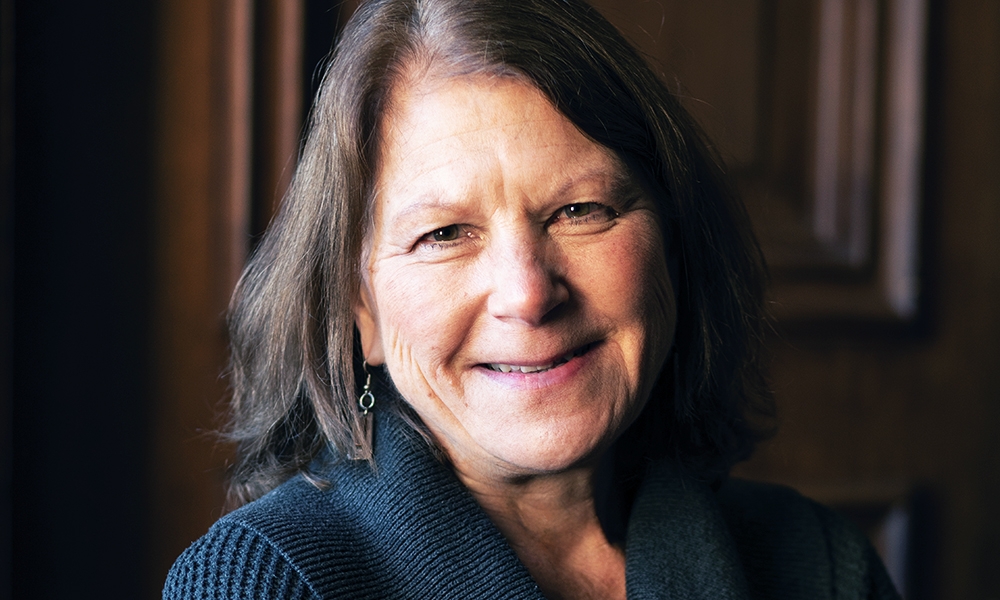
For one woman, Cathy VonRueden, the jubilee became something far more personal.
Her first spark of interest came even before visiting Rome. In preparing for her trip, she researched the designation and significance of the 2025 Jubilee Year, learning about its history and purpose. That groundwork planted the seeds of curiosity. When she finally spent a day in Rome—most of it at St. Peter’s Basilica, one of the major pilgrimage sites for the jubilee — the experience deepened her interest. Later, back home at St. Luke’s in Sandstone, a parish brochure on the jubilee renewed her desire to learn more. The more she explored the Jubilee Year — its rituals and its meaning — the more she felt moved by its central message: hope renewed, hope restored, hope shared.
By May of 2025, Cathy had entered retirement. Her heart, however, felt anything but retired. She longed to serve in a deeper way, to place her time and energy fully at the disposal of the Church. The words from Matthew 25 kept running through her mind: “When I was in prison, you visited me.”
Prison ministry began to take shape in her imagination, and soon she completed the required training and background checks. In July, she stepped through the gates of the Federal Correctional Institution in Sandstone, a minimum-security prison, and began what would become one of the most meaningful ministries of her life.
Although the inmates already had weekly Mass and Bible studies, Cathy wanted to offer something uniquely tied to the Jubilee Year — something they could not experience within prison walls. Then the question came to her: What if I brought the Jubilee Year pilgrimage to them? Most people could never visit all the sacred sites in Rome. These inmates couldn’t visit any. She set out to change that.
Her research expanded until she was compiling videos, images, notes and historical sources. What emerged was an eight-week virtual pilgrimage, complete with PowerPoint presentations and carefully selected footage of each holy site associated with the jubilee.
At the first session, Cathy explained the history of the Jubilee Years — where they originated in Scripture, how they evolved across centuries and even unusual facts she uncovered. The inmates listened, captivated, especially when she recounted the story of Pope St. Paul VI in 1975, who was struck by falling cement as masons loosened the old sealed Holy Doors — a moment caught on film that she was able to share.
The men learned of the changes Pope St. John Paul II later made to the Holy Doors, transforming them from sealed cement blocks into doors that could simply be pushed open.
Each gathering began with the official Jubilee Prayer followed by the Jubilee Hymn, their voices rising in a sincere and prayerful harmony within the prison meeting room.
Cathy shared video tours of seven jubilee pilgrimage sites in Vatican City and Rome — four major basilicas and three minor ones. One of the group’s most moving moments was watching Pope Francis open a specially designated Holy Door at Rebibbia Prison, where he also celebrated Mass for the inmates. At St. Peter’s Basilica, his frail health required him to push open the Holy Doors and pass through in a wheelchair. Yet at Rebibbia, as a powerful sign of hope and courage, he stood and walked through the doors himself.
Throughout the program, Cathy ensured that the inmates prayed the required devotions so that, together with attending Mass and going to confession, they could obtain a jubilee indulgence. She also introduced them to the pilgrimage sites within the Diocese of Duluth, reminding them that even though they lived within prison walls, they were still part of the diocesan family — and Bishop Felton’s invitation was addressed to them as well.
To make the experience more authentic, Cathy personally visited five of the six diocesan sites across Northern Minnesota, recording video and adding narrative for each site. For the final one at St. Joseph’s in Ball Club, a volunteer filmed the church on her behalf. She researched each site thoroughly — structural details, stained-glass windows, unique artifacts, relics and stories of the early parish communities — all of which she shared with heartfelt enthusiasm.
Over the eight weeks, Cathy received faith-filled expressions of appreciation from the men who attended. They listened attentively and asked thoughtful questions — some of which required her to dive into further research. While she could not know how each individual interiorly experienced the pilgrimage, the consistent and respectful dialogue suggested that the program held deep meaning for them.
In December, Bishop Felton visited the facility and celebrated a special Mass, referencing themes from the jubilee and acknowledging the effort the men had made to participate in the spiritual journey. For Cathy, it felt like a moment that brought the entire experience together.
Although her jubilee program has concluded, Cathy continues her weekly visits. The men still call upon Monsignor Buh for intercessory prayers, and Cathy remains attentive to new ways she can continue to serve the facility’s Catholics. As the Jubilee Year drew to a close, she admitted feeling a twinge of sadness — grateful for the extraordinary grace it brought to the men and the profound spiritual joy it stirred in her own heart.
Looking back, Cathy describes the jubilee experience as deeply rewarding. Her travels introduced her to churches she had never visited and uncovered historical details that gave her a richer appreciation for the diocese’s faith heritage.
While Jubilee Years come only once every 25 years, the impact of this one — especially within the walls of the Federal Correctional Institution in Sandstone — feels lasting. For Cathy, it was more than a milestone; it renewed her sense of purpose and left an imprint of faith that will endure long after the celebrations have ended.
For Cathy, the jubilee had truly become what it proclaimed: a pilgrimage of hope. Though the Holy Doors would close on Epiphany, January 2026, she knew that in Sandstone — behind locked gates and within guarded walls — hope had already found a way to stay open.
Diocese of Duluth 2025 Jubilee Pilgrimage Sites:
Cathedral of Our Lady of the Rosary, Duluth
Holy Spirit Church, Two Harbors
St. Anthony Church, Ely
St. Francis Church, Brainerd
St. Joseph Church, Ball Club
St. Martin Church, Tower