Come and See
Serving St. Vincent and the Grenadines
Serving St. Vincent and the Grenadines
St. Vincent and the Grenadines is a Caribbean nation of just over 110,000 people spread across one main island and six smaller inhabited isles, where agriculture, fishing and tourism drive the economy. Yet half the population lives on under $3 a day and resources for social services are limited. Though Catholics make up just over 6 percent of the population, the Diocese of Kingstown serves as the primary non-governmental provider of essential support — running schools, soup kitchens, homes for children and counseling services — with a growing call for mission partnerships to strengthen these ministries and walk alongside the community in faith and service.
St. Vincent and the Grenadines is a Caribbean nation of just over 110,000 people spread across one main island and six smaller inhabited isles, where agriculture, fishing and tourism drive the economy. Yet half the population lives on under $3 a day and resources for social services are limited. Though Catholics make up just over 6 percent of the population, the Diocese of Kingstown serves as the primary non-governmental provider of essential support — running schools, soup kitchens, homes for children and counseling services — with a growing call for mission partnerships to strengthen these ministries and walk alongside the community in faith and service.
Over the past several years, a partnership between the Diocese of Kingstown and the Diocese of Duluth has taken shape. At its core is a desire to support ministries on the islands by building relationships that endure and offering practical help where it’s most needed.
Jerry Jensen, a licensed psychologist from Brainerd, has been part of that work since 2017, traveling there several times a year. His call to mission began in high school, and it later led him to found Cedarbrook Center, a nonprofit serving children and families. He speaks at parishes about being a part of a mission that brings the healing, hope and joy of Jesus to others.
During a Mass at All Saints in Brainerd, Bishop Gerard County from the Diocese of Kingstown spoke about the realities in St. Vincent and the Grenadines — a nation with many needs but in particular a lack of psychological help for children dealing with trauma. Jerry missed Bishop County’s talk, but a fellow parishioner who was in attendance reached out, recognizing Jerry’s experience and resonance with what was shared. Jerry remained open to the idea and began praying: Lord, if You intend to use me in this ministry, show me the way.
He emailed and wrote to Bishop County. After some time, he received a phone call on Holy Saturday, inviting him to “come and see.” That phrase, common in the local culture, became the name — and spirit — of the mission trips that followed.
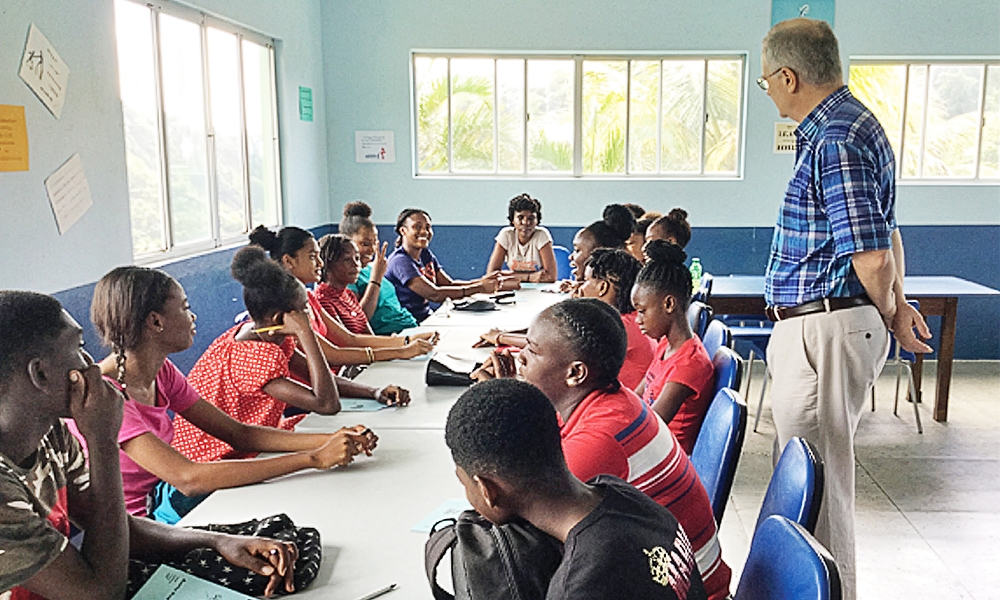
On his first visit, Jerry realized the greatest gift he could offer wasn’t just psychological expertise but simple presence. While the St. Benedict Home and soup kitchen needed hands-on help, the Catholic schools — five in total, serving about 2,000 students — required training for teachers in trauma-informed care. Beyond that, children needed mentors and consistent adult influence. Many parents work on cruise ships for months at a time, leaving gaps in daily guidance. Into that space, the Church steps in: religious sisters, priests, deacons and lay leaders who teach, feed and accompany these young lives.
From the start, Jerry focused on building capacity rather than creating dependence. He brought mentors from Kinship Partners, introduced practices to equip local staff and strengthened what was already in place. When the pandemic paused travel, the trips were put on hold, but relationships endured, and Jerry’s efforts helped shape a more formal liaison role between Kingstown and Duluth.
Today, the invitation extends past the boundaries of one story. There is a need for skills of all kinds — builders, plumbers, painters and, most of all, people willing to listen and stand beside their brothers and sisters in the Grenadines. Trips typically last 10-14 days to allow time for trust and connections to build. Volunteers might prepare meals, paint and repair buildings, visit the St. Benedict’s children’s home or help build a covered structure for laundry. These are “solidarity trips” and the aim is never to “do it all” and leave but to work side-by-side, strengthening the local Church as she serves her people.
Those who go describe the welcome as warm and generous. They’re thanked not only for the work they bring but for the relationships they build. For the Diocese of Duluth, this connection isn’t new — our diocese has supported the Kingstown Diocese in the past in a collaboration of mission — and the gratitude expressed reflects a memory of faithfulness and friendship.
If you ask Jerry what keeps him returning, he’ll tell you it’s the experience of the Church as one body — the discovery that when we serve together, we see Christ more clearly. “When did we see you hungry? When did we see you in need?” This question becomes concrete in this ministry: in classrooms, kitchens, churches and homes. In answering it, we find ourselves changed.
A group trip is planned for early December, around the first week of Advent. Whether you can travel or support from home, there’s a place for your gifts and your heart. To learn more or to invite Jerry to speak at your parish or group gathering, visit cedarbrook-center.org or email jj@cedarbrook-center.org.
Come and see. Come and serve. And discover the joy of a Church that bridges oceans with hope.