
The Sacred Purpose of the Sacrarium
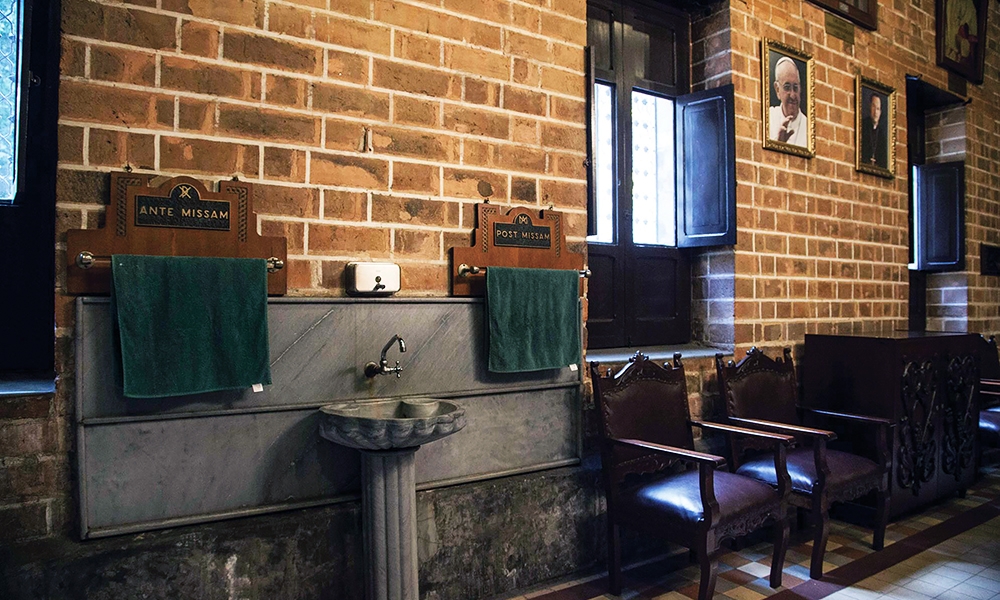
If you’ve ever stepped into the sacristy of a Catholic church, you may have noticed a special fixture called the sacrarium (also known as a piscina). It resembles an ordinary sink, sometimes topped with a simple metal lid, but its purpose is profoundly sacred: to return blessed waters and rinsings used in the liturgy directly to the earth, bypassing the sewer system. This ensures materials touched by divine worship are disposed of with reverence, honoring God’s sanctification of them. Rooted in centuries of Church tradition, the sacrarium prevents any mingling of the holy with the profane.
If you’ve ever stepped into the sacristy of a Catholic church, you may have noticed a special fixture called the sacrarium (also known as a piscina). It resembles an ordinary sink, sometimes topped with a simple metal lid, but its purpose is profoundly sacred: to return blessed waters and rinsings used in the liturgy directly to the earth, bypassing the sewer system. This ensures materials touched by divine worship are disposed of with reverence, honoring God’s sanctification of them. Rooted in centuries of Church tradition, the sacrarium prevents any mingling of the holy with the profane.
Installed in the sacristy, the sacrarium’s drain leads straight into the soil beneath the church floor. The General Instruction of the Roman Missal (GIRM) requires this fixture in every sacristy for cleansing liturgical vessels, linens and other items after Mass or sacraments. This reflects a core principle of the Church: blessed substances — set apart for God’s service — must return to the earth, symbolizing their sacred origin. As Vatican II reminds us, even the smallest details of worship express its dignity.
The Church prescribes careful disposal for liturgical items, using the sacrarium for liquids and burial or incineration for solids in consecrated ground. Common practices include:
Rinsing water for vessels and linens (e.g., purificators, corporals after Mass): poured into the sacrarium as the first rinse; later rinses may use a regular drain.
Baptismal water (after use or when aged): poured into the sacrarium.
Holy oils (when no longer needed): poured into the sacrarium.
Unusable sacred books or vessels: buried in church grounds or a cemetery; burned items’ ashes interred in consecrated soil.
Worn-out sacred linens: burned, with ashes buried in hallowed ground.
These norms safeguard worship’s sanctity, as the liturgy sanctifies participants and elements alike.
The Eucharist demands the greatest care. The Precious Blood must be fully consumed after distribution and never poured into the sacrarium, ground or drain. If spilled, the area should be wiped with purificators or linens, then rinsed; only this water — not the Blood — goes into the sacrarium.
A fallen fragment of the Body of Christ should be consumed if possible. If not, it should be placed in water until it dissolves, then poured into the sacrarium reverently. These rules, drawn from the GIRM and Redemptionis Sacramentum, protect the Eucharist — the “source and summit” of Christian life — from profanation.
The sacrarium originated in the early Middle Ages as stone basins (piscinae) for draining liturgical water, such as from baptisms or Eucharistic rites. By the medieval period, they were standardized near altars or sacristies for vessel and hand purification. This evolution, reaffirmed by Vatican II, shows the Church’s enduring commitment to sacred care.
Today, the sacrarium is a modest sacristy essential, rich in meaning. It reminds us that even the smallest details of liturgy demand holiness. Channeling blessed waters to the earth honors our Lord, returning what touches the divine to its source. As a hidden sign of reverence, it entrusts the sacred back to God.
In essence, the sacrarium invites deeper awe for the sacraments, revealing holiness in worship’s smallest acts.
Dean Lavato is the director of evangelizing communications and marketing for the Diocese of Duluth.